Saturday, August 30, 2025
The Role of APIs in Modern Real Estate Management

1. A Shift from Property Management to People Management
The real estate industry is evolving from a purely operational focus to one centered around people. Traditional property management once meant maintenance, rent collection, and compliance. Today, tenants expect more—personalized communication, responsive services, and digital access to their living or working environments. Tenant experience platforms are becoming the backbone of this transformation, bridging the gap between physical space and digital life.
2. Technology as the New Building Core
Buildings are no longer just concrete and steel—they’re becoming data-rich ecosystems. From IoT sensors and energy dashboards to mobile apps for service requests, every layer of technology contributes to a seamless tenant experience. The most forward-thinking landlords see digital platforms not as add-ons, but as integral parts of the building’s core infrastructure—essential to delivering value and reducing operational friction.
3. Data-Driven Personalization
The next wave of tenant experience platforms will rely heavily on data intelligence. By analyzing interaction patterns, occupancy trends, and feedback loops, platforms like Allthings can deliver personalized insights—automatically prioritizing issues, adapting communication styles, and even suggesting sustainable behavior changes. This turns buildings into learning systems that evolve with their occupants.
4. Integration over Isolation
One of the biggest challenges in property technology is fragmentation—multiple tools for communication, billing, maintenance, and analytics. The future lies in unified systems. Through open APIs and flexible integrations, platforms can consolidate services into a single, intuitive interface. This not only simplifies workflows for property managers but also enhances clarity and trust for tenants who expect one consistent experience across touchpoints.
5. Sustainability and ESG as Core Drivers
Environmental and social responsibility are no longer optional. Digital tenant platforms play a direct role in helping buildings meet ESG goals—tracking energy usage, promoting sustainable habits, and fostering transparent communication. In the future, we’ll see tenant engagement and sustainability performance become deeply intertwined, supported by smart analytics that turn environmental data into actionable insights.
6. The Human Future of Smart Living
Ultimately, technology’s role is to serve people. The most successful tenant experience platforms will balance automation with empathy—creating digital tools that feel human, intuitive, and empowering. As buildings become more connected, their true competitive advantage will lie in how well they support the humans inside them. In that sense, the future of tenant experience isn’t just smart—it’s personal.
Weitere interessante Artikel

The Hidden ROI of Digital Tenant Platforms
Beyond convenience — how property digitization drives measurable long-term value.

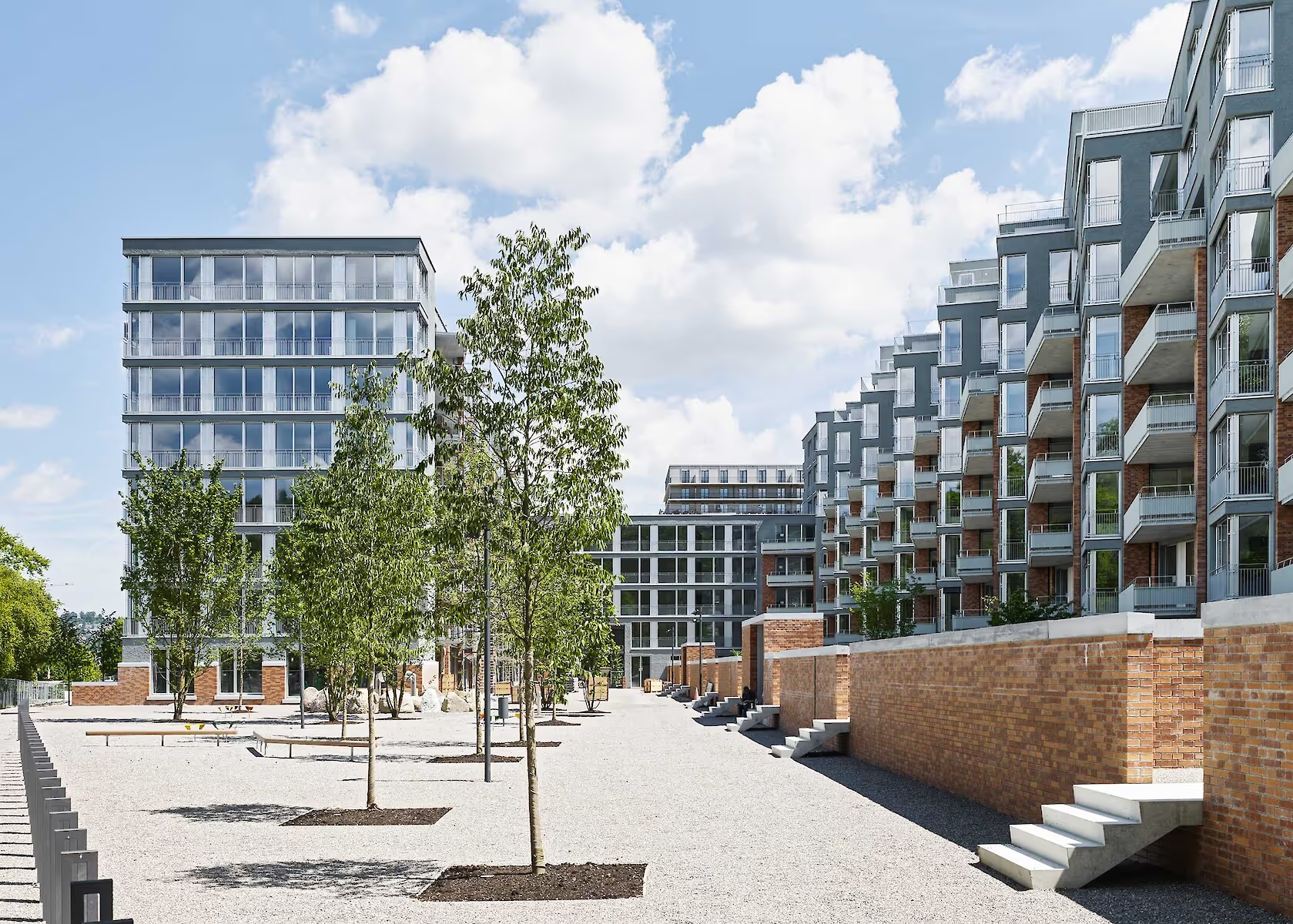
Zürcher Freilager: Digital communication that strengthens the neighbourhood
More cooperation, less effort: Zurich Freilager uses the Allthings platform to simplify communication with over 1000 residents and to promote coexistence on the site.

Easy. Pragmatic. Swiss. This is how real estate business works today.
Contact the Allthings team
Our team usually answers within 24 hours.