In short: At the apartment handover, the landlord checks the condition of the apartment, records it in a handover report and immediately reports defects for which the tenants are liable. This is required by Art. 267a of the Swiss Code of Obligations (CO). Anyone who fails to carry out this inspection loses their claims for all defects that would have been recognisable in a customary inspection.
You can download our free template for the apartment handover report directly, as a PDF to print or as a Word file to adapt (both in German):
What is the apartment handover?
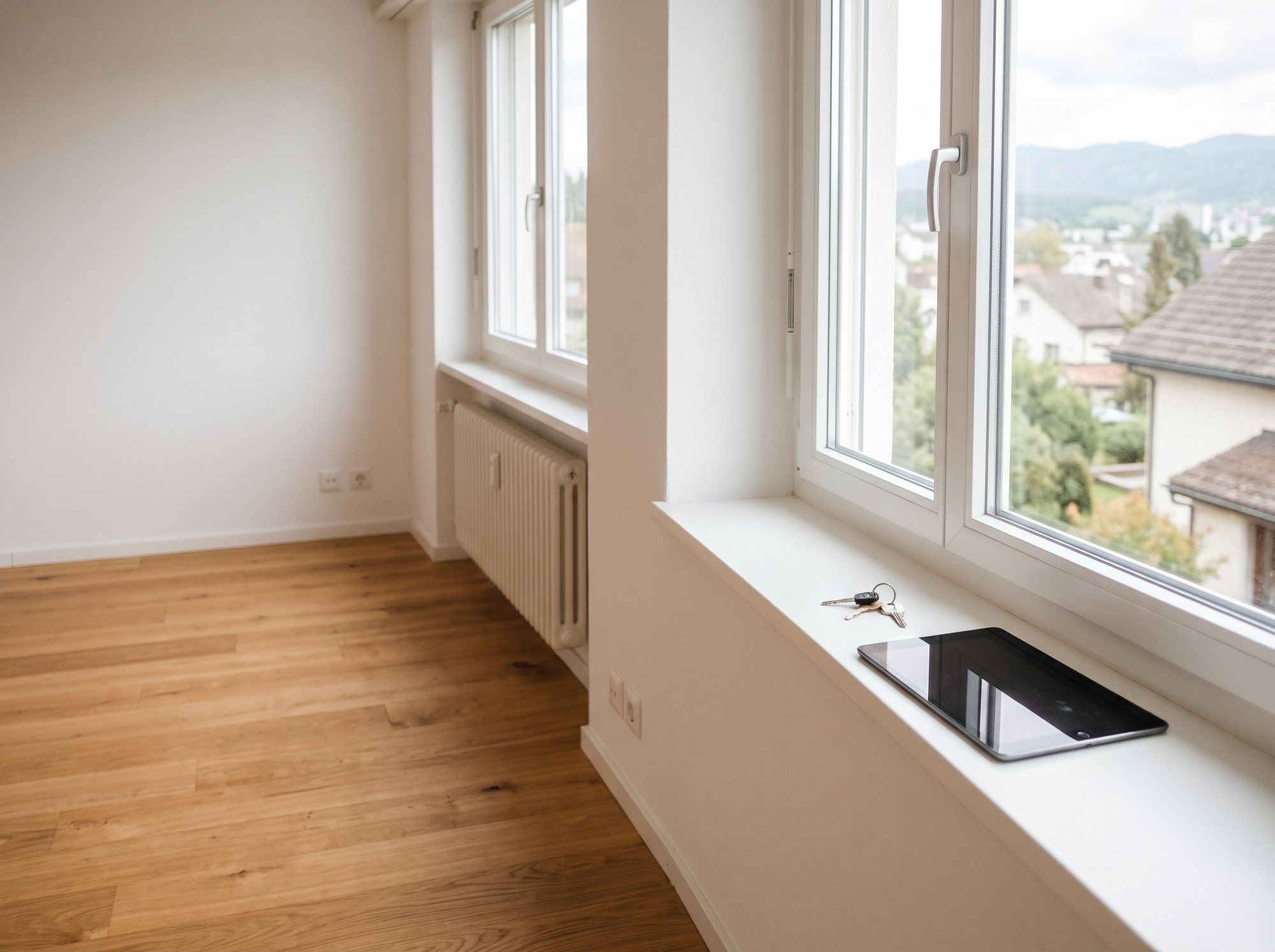
The apartment handover is the return of the rented apartment to the landlord at the end of the tenancy. It includes the joint inspection, the handover report and the return of all keys. In Switzerland several terms are common: Wohnungsabgabe and Wohnungsrückgabe from the tenant's perspective, Wohnungsabnahme from the landlord's perspective, Wohnungsübergabe for both directions. The law speaks of the return report.
For property managers, the handover is the moment that decides who bears which costs. What is in the report is hard to dispute later. What is missing often cannot be added afterwards.
When must the apartment be handed over?
Unless otherwise agreed, the apartment must be returned on the last day of the lease during normal business hours (Art. 79 CO). If this day falls on a Sunday or an officially recognised public holiday at the location of the apartment, the handover moves to the next working day (Art. 78 CO). Saturday is not clearly regulated: the Federal Act on the Calculation of Time Limits on Saturdays only treats Saturday like a public holiday for statutory and officially set deadlines, whereas the handover date is a performance date. The lease and local custom are therefore what mainly count.
Many leases set a different date, often the morning of the following day, for example 1 April until noon for a tenancy ending on 31 March. The lease then applies. In practice, the property manager and tenants agree the exact time a few weeks in advance.
For a pre-inspection, tenants must grant access insofar as this is necessary for re-letting, and the landlord must announce the appointment in good time (Art. 257h para. 2 and 3 CO). Such a pre-inspection is worthwhile: the tenants learn early what they should still repair or clean, and the property manager can schedule contractors for the time between move-out and move-in.
In what condition must the apartment be returned?
The apartment must be returned in the condition resulting from use in accordance with the lease (Art. 267 para. 1 CO). This means the apartment does not have to look new. Marks that arise from normal living over the years are borne by the landlord. Tenants are liable for damage beyond that.
Normal wear and tear arises from ordinary living, for example slightly yellowed walls after several years, signs of use on the floor in walkways or a customary number of dowel holes, provided they are properly filled.
Excessive wear and tear goes beyond use in accordance with the lease, for example burn marks, deep scratches from pets, water damage through carelessness or heavy discolouration from smoking.
For excessive wear and tear, in practice tenants do not pay the replacement value but only the current value of the damaged part. An example: a floor covering with a lifespan of ten years is half written off after five years, so the tenants bear at most half of the replacement costs. The joint lifespan table of the Swiss homeowners' association (HEV) and the tenants' association serves as a guide to the lifespan of individual building components. You will find the lifespan of all components and a current-value calculator on our page on the lifespan table.
Important for leases: an agreement by which tenants undertake in advance to pay compensation at the end of the tenancy that covers more than any damage is void (Art. 267 para. 2 CO). Flat-rate renovation contributions regardless of the condition are therefore problematic.
What does cleaning at the handover include?
The apartment must be handed over as clean as the lease and local custom require. In most leases this means thoroughly cleaned, including storage rooms. In some regions, for example north-western Switzerland, many leases only require a broom-clean handover and a cleaning flat rate.
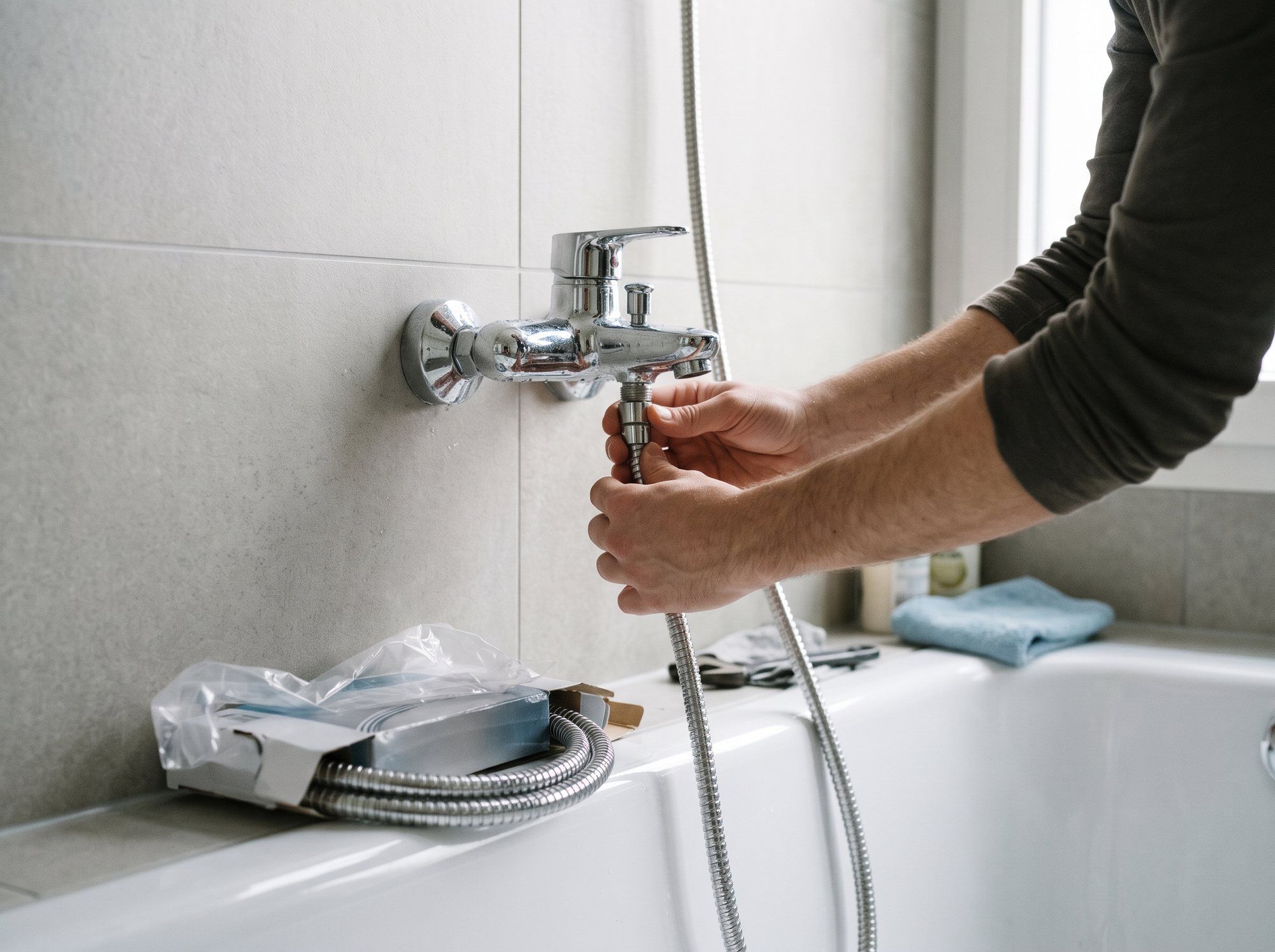
In addition, tenants must remedy at their own expense minor defects that can be fixed with ordinary cleaning or repair (Art. 259 CO). Depending on local custom, these include defective light bulbs, blocked drains, a worn shower hose or dirty extractor hood filters.
Typical items of the final cleaning:
- Windows inside and out, frames, blinds and windowsills
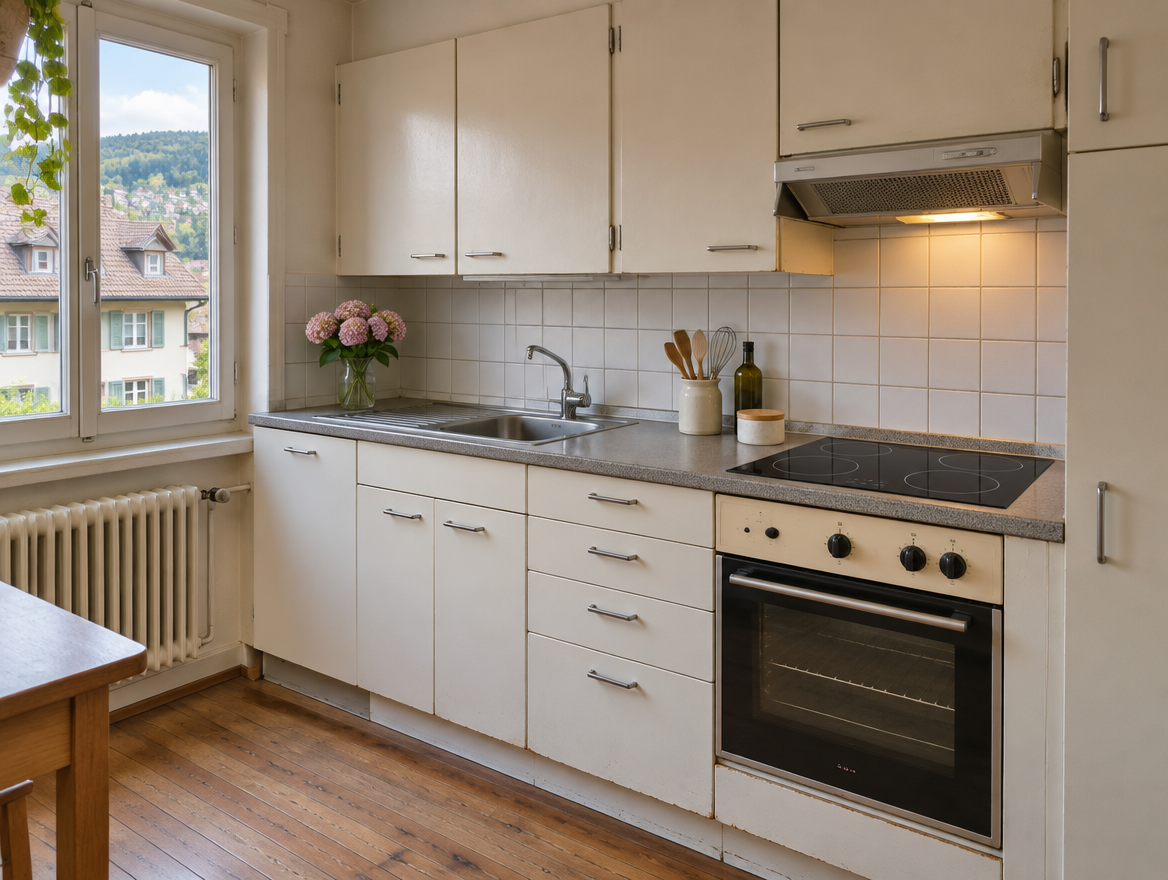
- Kitchen with oven, baking trays, hob, extractor hood and filters, fridge and freezer (defrosted), cupboards inside
- Bathroom and WC with descaling of fittings, shower heads and tiles, drains and ventilation grilles
- Floors, skirting boards, doors and door frames, switches and sockets
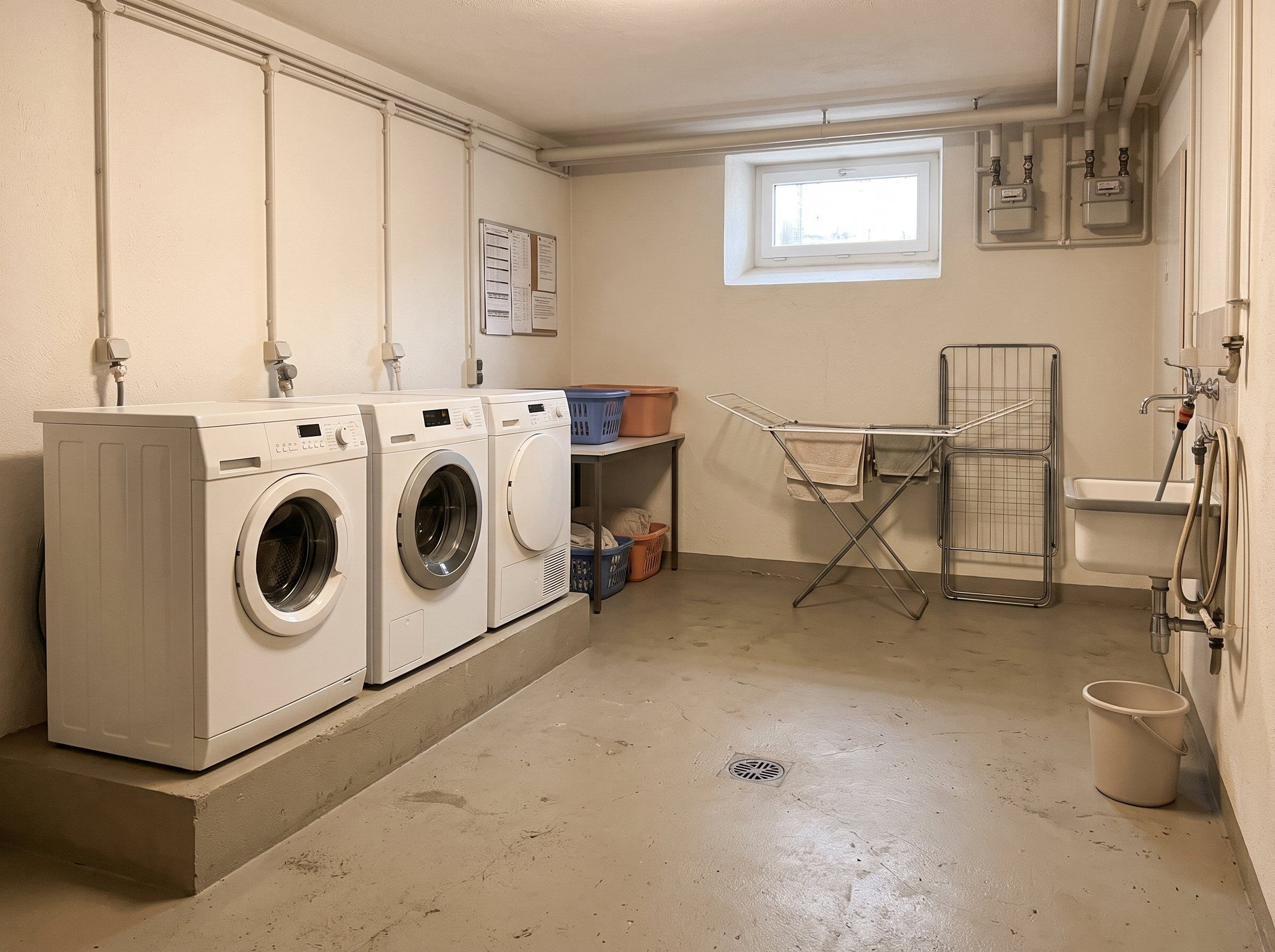
- Built-in cupboards inside, radiators, balcony, cellar and attic
- Letterbox and, if assigned, garage or parking space
Anyone who hires a cleaning company should agree an acceptance guarantee: if the property manager finds fault at the inspection, the company cleans again free of charge. For the property manager it makes sense to have a contact person from the cleaning company on site at the inspection.
What must the handover report contain?
A handover report records room by room the condition in which the apartment was returned, which defects exist and who is responsible for them. It is not required by law, but it is the central piece of evidence if costs are disputed later.
Several names are common for the same document: handover report, inspection report or move-out report. The law speaks of the return report (Art. 256a para. 1 CO). When new tenants move in, the counterpart is called the move-in report. The same requirements apply to all of them.
A complete report contains:
- Property, apartment, date and time, persons present
- for each room and component the condition: in order, normal wear and tear or defect
- each defect with a short description, photo number, age of the component and responsibility (tenants, landlord or disputed)
- Meter readings for electricity, water, gas or heat
- all keys with type, number and quantity
- Agreements, for example extra cleaning by a certain date
- Comments and reservations of the tenants
- Signatures of both sides and a note that both have received a copy
On the signature: tenants do not have to sign the report. By signing, they usually acknowledge the items listed as tenant damage, as most report forms contain an acknowledgement clause for this. If they disagree with individual items, they can note this directly in the report, for example with “defect disputed”. For the property manager, a signed report with reservations is better than no signature at all.
The report has a lasting effect: new tenants can ask to see the previous tenants' return report at the handover (Art. 256a para. 1 CO). Property managers should therefore file it so that it is to hand at move-in.
How does the move-out inspection work?
A move-out inspection takes place in eight steps, from agreeing the date to releasing the deposit. The process is described from the property manager's perspective.

1. Agree the date and offer a pre-inspection. After receiving the notice, confirm the handover date in writing and offer a pre-inspection a few weeks beforehand. Tell the tenants what is expected at the handover: cleaning, minor maintenance, all keys.
2. Prepare the documents. Have the lease, move-in report, key list from move-in and details on the age of floors, paintwork and appliances ready. Without a move-in report it is hard to prove whether a defect is new.
3. Check the apartment room by room. Always proceed in the same order, including storage rooms, balcony, cellar and letterbox. Briefly operate appliances, blinds, fittings and switches.
4. Record defects with photos. Photograph each defect, one overview and one detail shot, and enter the photo number in the report. Photos with date and time are decisive in a dispute.
5. Record meter readings and keys. Note meter readings with meter numbers and check all keys against the list from move-in.
6. Discuss and sign the report. Go through each defect with the tenants, record who is responsible and note any reservations. Both sides receive a copy.
7. Report defects in writing immediately. Even if everything is in the report: defects for which the tenants are to be held liable must be reported immediately (Art. 267a CO). Without a signed report, report the defects in writing without delay, ideally by registered mail and with photos.
8. Settle the final statement and deposit. Obtain quotes or invoices for the repairs, calculate the tenants' share at current value and settle the account. Then settle and release the deposit with the tenants.
How quickly must the property manager report defects?
The landlord must report defects for which the tenants are liable immediately (Art. 267a para. 1 CO). Failing that, the landlord loses its claims, except for defects that could not be recognised in a customary inspection (para. 2). If such hidden defects are discovered later, they too must be reported immediately (para. 3).
The law does not specify a fixed number of days. Zurich court practice assumes two to three working days; in the specialist literature, figures range up to one week. For property managers this means: the notice of defects belongs in the days immediately after the inspection, not in the final statement weeks later. The safest option is notice on the handover day itself, via the signed report, plus in writing if the tenants did not sign or were not present.
The notice should describe each defect individually, support it with photos and state clearly that the landlord holds the tenants liable for it. A general wording such as “apartment in poor condition” is not enough.
What applies to the keys?
All keys must be returned at the handover, including copies the tenants had made themselves. The property manager checks the number against the key list from move-in and confirms the return in writing, in the report or with a separate receipt.
If a key to a master key system is missing, cylinders may need to be replaced for security reasons. Who bears which costs depends on the individual case, for example on whether misuse is to be feared and how old the system is. The key return should therefore always be recorded with quantity and number.
What happens to the rental deposit?
After the handover, the rental deposit remains in the account until both sides agree or a decision is made. The law regulates this in Art. 257e CO; details on the amount, account and settlement are on our page on the rental deposit:
- The landlord must deposit a security in money or securities at a bank in a savings account or securities deposit in the tenant's name (para. 1).
- For apartments, the landlord may demand at most three months' rent (para. 2).
- The bank may only release the deposit with the consent of both parties, or on the basis of a legally binding payment order or a final court judgment (para. 3).
- If the landlord does not assert a claim through legal channels within one year of the end of the tenancy, the tenants can reclaim the deposit from the bank (para. 3).
The property manager therefore cannot simply deduct repair costs from the deposit. It settles the costs, obtains the tenants' consent to the payout and releases the rest. If the tenants do not agree, the route via the conciliation authority or debt enforcement remains. For property managers it is therefore worth preparing the final statement quickly: the one-year deadline runs from the end of the tenancy.
Apartment handover checklist for property managers
Before the handover day
- Notice checked and confirmed to the tenants
- Handover date agreed in writing, pre-inspection offered
- Tenants informed about cleaning, minor maintenance and keys
- Move-in report, key list and age of components ready
- Next tenants and contractors scheduled for the time after move-out
On the handover day
- Apartment checked room by room, including storage rooms
- Defects photographed and entered in the report with photo number
- Meter readings noted
- All keys counted and receipted
- Report discussed, reservations noted, signed by both sides, copy handed over
- Tenants' new address recorded
After the handover day
- Defects reported in writing immediately if not acknowledged in the signed report
- Orders placed for repairs and extra cleaning
- Tenants' share of costs calculated at current value
- Final statement sent, deposit settled and released
- Report and photos filed for the next tenants' move-in
Digital apartment handover: photos, report and defect tickets
For property managers, the apartment handover is above all a documentation task. With many tenant changes a year, paper reports, photos on private phones and emails with contractors quickly drift apart. A digital process keeps everything in one place.
During the tenancy: tenants must report to the landlord defects that they do not have to remedy themselves (Art. 257g CO). If these reports come in via a tenant portal or tenant app with photos and dates, it is clear at the handover which damage was already known and cannot be charged to the tenants. What tenants must fix themselves is explained in the article on minor maintenance.
At the inspection: defects are recorded with a photo directly on a smartphone or tablet. Every photo automatically has a date and time, and the room is assigned through the report.
After the inspection: each defect becomes a ticket with photos, location and deadline that goes straight to the responsible contractor. This shows what has been done by the time the next tenants move in, and the costs can later be assigned to the final statement.
With the Allthings ticketing system, property managers record defects from the inspection as tickets with photos and pass them on to contractors. Via the tenant portal, tenants report damage during the tenancy and arrange appointments digitally.
What tenants should do before the handover
Tenants are well prepared if they have cleared and cleaned the apartment, fixed minor defects and have all keys with them. It helps to photograph the apartment themselves before the handover and bring the move-in report. This shows which defects already existed at move-in.
Anyone who cannot attend can be represented at the handover, ideally with a written power of attorney. Anyone who wants to return the apartment before the termination date is only released from their obligations if they propose a reasonable, solvent new tenant who takes over the lease on the same terms (Art. 264 CO).
What if you cannot agree?
If the property manager and tenants cannot agree on defects, costs or the deposit, the conciliation authority for tenancy matters is the first point of contact. It consists of an independent chair and one representative each of the tenant and landlord side, and the procedure follows the Civil Procedure Code. The Federal Office for Housing (FOH) keeps a list of the competent conciliation authorities.
The better the handover is documented, the less often it comes to that. A clear report with photos, an immediate notice of defects and a comprehensible settlement at current value resolve most cases without proceedings.
Sources
- Swiss Code of Obligations (CO, SR 220), version of 1 October 2026, fedlex.admin.ch: Art. 78, 79, 256a, 257e, 257g, 257h, 259, 264, 267 and 267a
- Federal Office for Housing (FOH): conciliation proceedings and addresses of the conciliation authorities in tenancy matters
Information as of 4 November 2026.