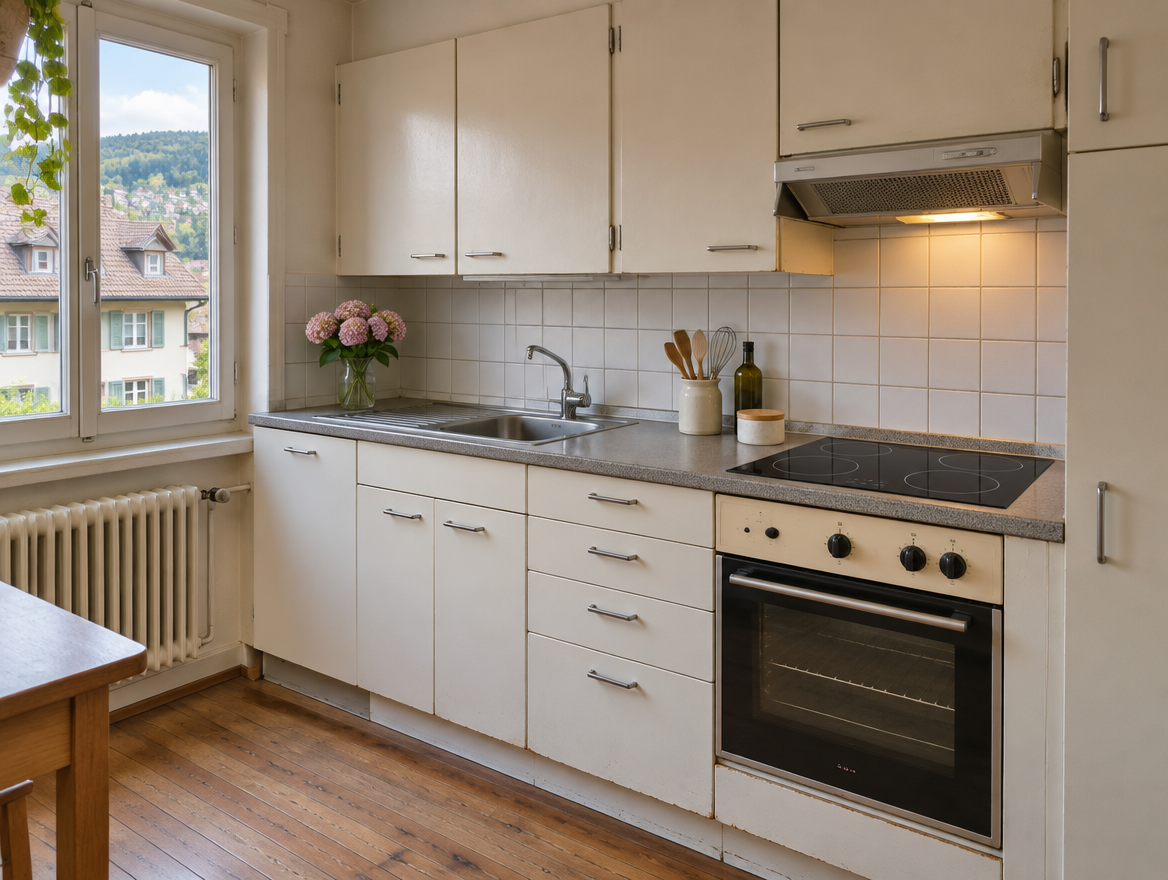
In short: The joint lifespan table of HEV Schweiz and the Swiss Tenants' Association sets out how long the components and appliances of a rented apartment last on average, and thus determines what share tenants pay for damage beyond normal wear and tear: only the current value, i.e. the part not yet written off. Once the lifespan has expired, the landlord usually bears the costs alone.
Calculator
Time value calculator: residual value of a fitting
- Lifespan according to the table
- –
- Lifespan used
- –
- Remaining lifespan
- –
- Time value in % of the new value
- –
Time value –
The time value is usually the maximum tenants pay for damage beyond normal wear and tear. For guidance only, not legal advice: condition, care and the practice of the conciliation authority can change the result.
Source: Paritätische Lebensdauertabelle von HEV Schweiz und Mieterinnen- und Mieterverband Deutschschweiz. Retrieved on 04.11.2026.
The calculator uses the values from the joint lifespan table. Choose a component, enter its age and the costs: it shows the remaining value and the share in percent and francs. It does not replace an individual assessment, for example when a part only needs to be repaired rather than replaced. How the calculation works is explained further down under “How is the current value calculated?”.
What is the joint lifespan table?
The joint lifespan table is a list of guide values for the expected lifespan of fittings in residential and commercial premises, from the heating to floors and kitchen appliances to the letterbox. “Joint” (paritätisch) means that the owner and tenant sides set the values together. This makes the table acceptable to both sides and explains why it is the usual standard in German-speaking Switzerland.
It is published by HEV Schweiz and the Tenants' Association of German-speaking Switzerland. It is supported by, among others, the Swiss Real Estate Association (SVIT), the Swiss Housing Association (SVW), Wohnen Schweiz and the Swiss Insurance Association (SVV). The insurance association's support matters in practice: it is meant to ensure that tenants' liability insurers pay compensation according to the table.
The values apply to medium material and workmanship quality under normal, average use. A luxury kitchen does not automatically last longer, a cheap appliance not automatically shorter: the calculation is based on the average.
Which version applies?
The first joint table has applied since 1 January 2006, a first revision since 1 January 2016. A revised version has applied since 1 February 2024. The associations reviewed the values in 2023 with experts from letting and construction. The complete table is available as a brochure from HEV and the Tenants' Association, and individual values can be looked up free of charge in the associations' online search.
What is the lifespan table used for?
The table is used in four situations, most often for property managers at the apartment handover.
Apartment handover and sharing of damage. Tenants must return the apartment in the condition resulting from use in accordance with the contract (Art. 267 para. 1 CO). They are liable for excessive wear and tear, but only for the part of the lifespan that has not yet expired. The landlord must check the condition on return and report defects immediately (Art. 267a CO). The process is described in the article on the apartment handover.
During the tenancy. If a fitting's lifespan has expired, tenants are not entitled to have it replaced automatically. There is only a claim if the fitting is defective, i.e. if continuing to use it can objectively no longer be expected. Conversely, defective fittings must be replaced even before their lifespan expires. The landlord must keep the apartment in a fit condition (Art. 256 para. 1 CO). The rights tenants have in the event of a defect are explained in the article on rent reduction.
Value-enhancing investments. If the landlord replaces a fitting with a better one, the value-enhancing part may be passed on in the rent. A reasonable rate for interest, depreciation and maintenance is permitted (Art. 14 para. 4 VMWG). Depreciation requires a lifespan, and the table expressly names this purpose. How the increase is calculated is shown in the article on rent increases.
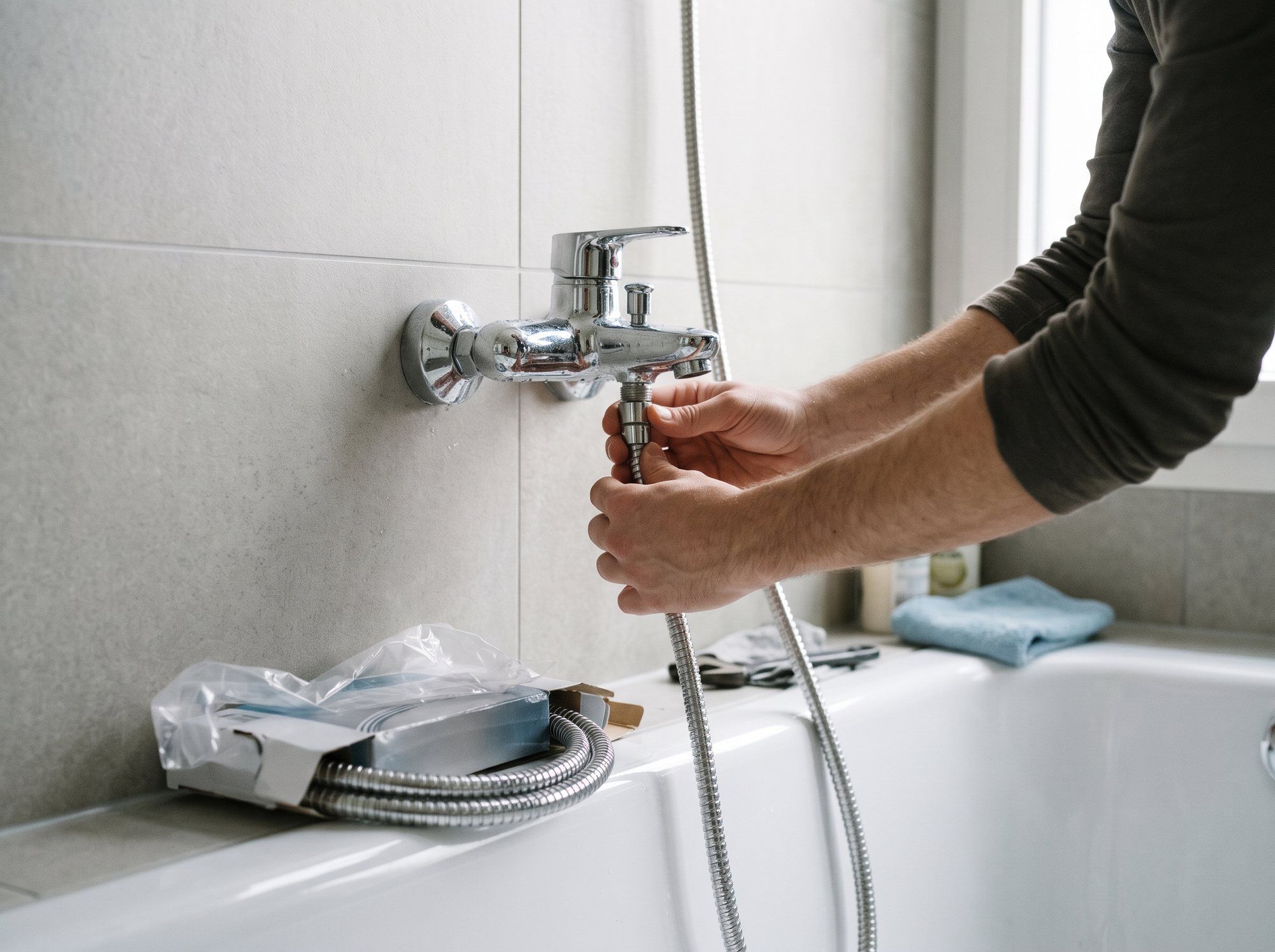
Minor maintenance. The table does not apply here. Minor cleaning and repairs are always borne entirely by the tenants (Art. 259 CO), regardless of age. The table marks such items, for example baking trays, activated carbon filters or the shower hose, with “kU”. More on this in the article on minor maintenance.
How is the current value calculated?
The current value is calculated on a straight-line basis: subtract the actual age from the value in the table and divide the remainder by the lifespan. The tenants' share is this percentage of the cost of replacement or repair.
Tenants' share = costs × (lifespan − age) / lifespan
What counts is the age since installation or since the last renewal, so for paint since the last repaint, for parquet since the last sanding. If the age is equal to or greater than the lifespan, the share is zero.

Worked examples from apartment inspections
Example 1: fitted carpet with burn marks. The fitted carpet in the living room was newly laid when the tenants moved in and has to be replaced after six years because a toppled candle damaged it. Lifespan: 10 years. Replacement cost: CHF 2,400. Tenants' share: CHF 2,400 × (10 − 6) / 10 = CHF 960 (40 %).
Example 2: wall with paint splashes. The apartment was freshly painted when the tenants moved in; after three years a wall in the children's room has to be repainted. Lifespan of an emulsion paint: 8 years. Cost: CHF 640. Tenants' share: CHF 640 × (8 − 3) / 8 = CHF 400 (5/8 or 62.5 %).
Example 3: fridge past its lifespan. The fridge with integrated freezer is 12 years old and was damaged by improper defrosting. Lifespan: 10 years. Tenants' share: CHF 0, the lifespan has expired.
Example 4: nicotine despite fully depreciated paint. After eight years, an emulsion paint is fully depreciated. If someone smoked heavily in the apartment and the painter therefore needs a sealing primer or a third coat, the tenants still bear this extra work. The table itself gives this example.
| Case | Lifespan | Age | Costs | Tenants' share |
|---|---|---|---|---|
| Fitted carpet, burn marks | 10 years | 6 years | CHF 2,400 | 40 % = CHF 960 |
| Emulsion paint, paint splashes | 8 years | 3 years | CHF 640 | 62.5 % = CHF 400 |
| Laminate medium quality, water damage | 15 years | 5 years | CHF 3,000 | 66.7 % = CHF 2,000 |
| Fridge with freezer | 10 years | 12 years | CHF 1,500 | 0 % = CHF 0 |
Lifespan of the main components
The following selection shows components that are often discussed at apartment inspections. All items can be searched in the calculator above.
| Area | Component | Lifespan |
|---|---|---|
| Walls | Paint, emulsion or distemper | 8 years |
| Walls | Paint, acrylic, alkyd or synthetic resin | 15 years |
| Walls | Woodchip wallpaper, printed or plain | 10 years |
| Floors | Fitted carpet, medium quality | 10 years |
| Floors | Laminate, medium quality (class 22/32) | 15 years |
| Floors | Solid parquet, glued parquet | 40 years |
| Floors | Engineered parquet with 4 mm wear layer or more | 30 years |
| Floors | Parquet sealing, surface treatment | 10 years |
| Floors | Linoleum, vinyl, rubber | 20 years |
| Kitchen | Fridge with integrated freezer | 10 years |
| Kitchen | Cooker and oven, ceramic and induction hob | 15 years |
| Kitchen | Dishwasher | 15 years |
| Kitchen | Extractor hood incl. metal filter | 10 years |
| Kitchen | Worktop, stainless steel, granite, engineered stone | 25 years |
| Bathroom | Washbasin, toilet, bidet, ceramic | 35 years |
| Bathroom | Bathtub or shower tray, acrylic | 25 years |
| Bathroom | Mixer tap, chrome-plated | 20 years |
| Bathroom | Grout and sealant joints | 8 years |
| Doors and windows | Interior doors, solid wood | 30 years |
| Doors and windows | External slatted blinds, aluminium | 25 years |
| Locking system | Lock cylinder and keys | 20 years |
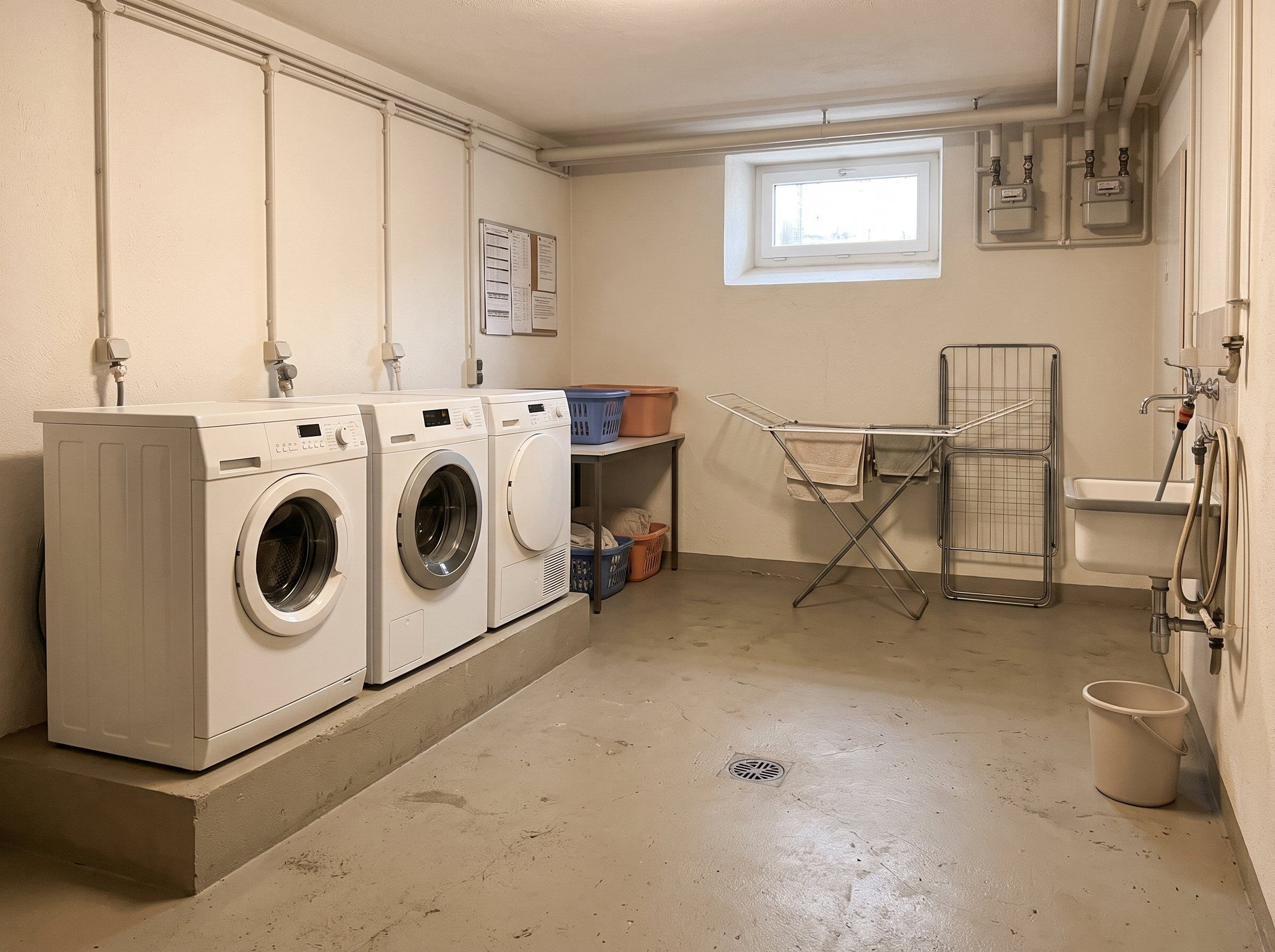
| Laundry room | Washing machine, tumble dryer | 15 years |
Source: joint lifespan table of HEV Schweiz and the Tenants' Association of German-speaking Switzerland, 2016 edition.
Offices and commercial premises
In commercial premises, floors and walls are subject to heavier use. The table therefore shortens the lifespan, in particular of floor, wall and ceiling coverings: by 20 % for offices, by 25 % for commercial use with little wear such as shops, and by 50 % for commercial use with heavy wear such as restaurants. A fitted carpet with a ten-year lifespan is therefore written off after eight years in an office and after five in a restaurant.
Repair, replace or compensate for reduced value?
Not every damage requires replacement. If excessive wear and tear can be repaired so that the next tenants can accept it, such as scratches on the kitchen worktop, open dowel holes or chipped paint on radiators and door frames, the tenants bear the repair costs. The lifespan then plays no role, because the component is not replaced.
If a repair is disproportionate, compensation for reduced value is often the best solution for both sides. The landlord forgoes replacement, and the tenants pay an amount for the remaining defect. According to the Tenants' Association, the amount is discretionary and may exceed neither the current value nor the repair costs.
Important for partial damage: a single cracked tile does not justify retiling the whole room at the tenants' expense just because the tile is no longer available. Even then, the current value counts.
How binding is the lifespan table?
The lifespan table is a guideline of the associations, not a law. Neither the CO nor the VMWG mention lifespans. In practice it is nevertheless the standard: insurers calculate with it and courts refer to it. The Zurich District Court, for example, calculated the costs of a locking system at current value according to the table, with 20 years for lock cylinders and keys (ZMP 2021 no. 3).
Limits property managers should know:
- Medium quality: for a clearly higher-quality or simpler component, a different value can be justified in a dispute.
- Burden of proof: the landlord must prove that damage arose during the tenancy and when a component was installed or last renewed. Without a move-in report and year of installation, this becomes difficult.
- Notification: defects not reported immediately at the inspection are forfeited, unless they could not be detected by a normal inspection (Art. 267a CO).
- No lump sums: an agreement in which tenants undertake in advance to pay compensation covering more than any actual damage is void (Art. 267 para. 2 CO).
- Other purposes: the associations only recommend the table for sharing damage and for improvements. For other purposes its use is at the users' discretion and is not recommended by the publishing associations.
From the property manager's point of view: inspection, report and invoice
For property managers, the application of the table is decided long before the tenants move out. Anyone who does not know installation years and renovations cannot calculate a current value at the handover.
1. Record installation years. For each apartment, record when floors, paintwork, kitchen appliances and sanitary fittings were installed or renewed, with the invoice or order as evidence. Ideally filed directly with the apartment, not in the accounting folder.
2. Keep a proper move-in report. Record existing defects at move-in and have the tenants sign. New tenants can view the previous tenants' handover report (Art. 256a para. 1 CO).
3. Record age and condition in the inspection report. For each defect: component, year of installation or renovation, photo number and classification (normal wear and tear, tenant damage, disputed). This makes the invoice traceable later.
4. Report defects immediately. Report defects the tenants are liable for immediately in writing if they are not acknowledged in the signed report (Art. 267a CO).
5. Get a quote and calculate the share. Obtain the costs of replacement or repair, use the calculator to determine the share at current value and show it per item in the final statement: costs, lifespan, age, share. Tenants should report their damage to their liability insurer; a statement based on the table makes this easier.
6. Settle the deposit. Only release the rental deposit with the consent of both sides once the statement has been accepted. Details in the article on the rental deposit.
With Allthings documents, property managers file invoices, reports and installation years per property and apartment, so that they are at hand at the inspection. Defects from the inspection are recorded in the ticketing system as tickets with photos and passed on directly to tradespeople.
Lifespan and renewal planning
Many property managers also use lifespans to plan renewals and provisions: when is the heating due, when the façade, when the kitchens of an estate? The joint table can give some orientation for this, but it is not made for it. For planning, the actual condition counts, which is why condition surveys of the property are part of it. In condominium ownership, the topic is part of condominium management.
Sources
- HEV Schweiz: lifespan table (online search and explanations)
- Swiss Tenants' Association: lifespan table
- Joint lifespan table, HEV Schweiz and MV Deutschschweiz, edition valid from 1 January 2016 (purpose, application, examples, reduction for special use)
- Der Schweizerische Hauseigentümer: joint lifespan table revised, 1 February 2024
- Swiss Tenants' Association: fact sheet on damage when moving out
- Swiss Code of Obligations (CO), Art. 256, 256a, 259, 267 and 267a
- Ordinance on the Lease and Usufructuary Lease of Residential and Commercial Premises (VMWG), Art. 14
- law.ch: Zurich District Court, ZMP 2021 no. 3 (missing keys, current value according to the lifespan table)
Information as of 4 November 2026.